What is the difference between Free and Pro?
Free answers support-safe WooCommerce questions with product search, availability, verified order status, tracking through verified order status, status mapping, bearer-token REST security, and OpenAPI schemas. Pro adds the controlled follow-up workflows serious stores need: consent-based Lead Capture, local lead analytics, secure cart and reorder review links, Product Discovery controls, AI Search Keywords, Knowledge Builder, Advanced Tracking custom integration support, and multi-currency-safe product metadata.
Can I use Free without buying Pro?
Yes. Free remains usable on its own for the core support-safe WooCommerce AI workflow. Pro is optional for stores that need controlled next steps after a customer shows product or reorder intent.
Why would a WooCommerce store upgrade to Pro?
Upgrade when support conversations should not end with only a safe answer. Pro helps capture buyer intent, guide customers to secure review links, improve catalog matching, control what AI can recommend, keep answers grounded in approved content, and support custom tracking output through verified order status.
Does Pro create orders or process payments?
No. Pro does not create orders, process payments, issue refunds, cancel orders, secretly modify carts, or modify subscriptions/autoship. Secure links are signed, expiring, customer-click review links that let the customer review before taking the next step.
How do Secure Cart Links work?
When a customer confirms the products they want to review, Pro can generate a signed and expiring cart review link for eligible public, purchasable items. The customer clicks the link, reviews the cart, and remains in control of the purchase path.
How do Secure Reorder Links work?
After the customer verifies a prior order, Pro can generate a signed and expiring reorder review link for eligible public, purchasable items from that order. Ineligible items are skipped, and wrong verification fails safely.
Can customers accidentally add duplicate cart quantities?
Repeated secure-link clicks do not duplicate cart quantity. The secure-link workflow is designed for customer review, not hidden cart mutation.
Does Lead Capture send emails or sync to a CRM?
No. Lead Capture stores explicit customer-consented lead records locally and provides local lead review/analytics. CRM sync, webhook delivery, and email delivery are not included in the current build.
Where are captured leads stored?
Captured leads are stored locally in the WooCommerce site's WordPress environment for merchant review. Do not collect or paste private customer data beyond the details the customer explicitly consents to provide for follow-up.
What does Product Discovery control?
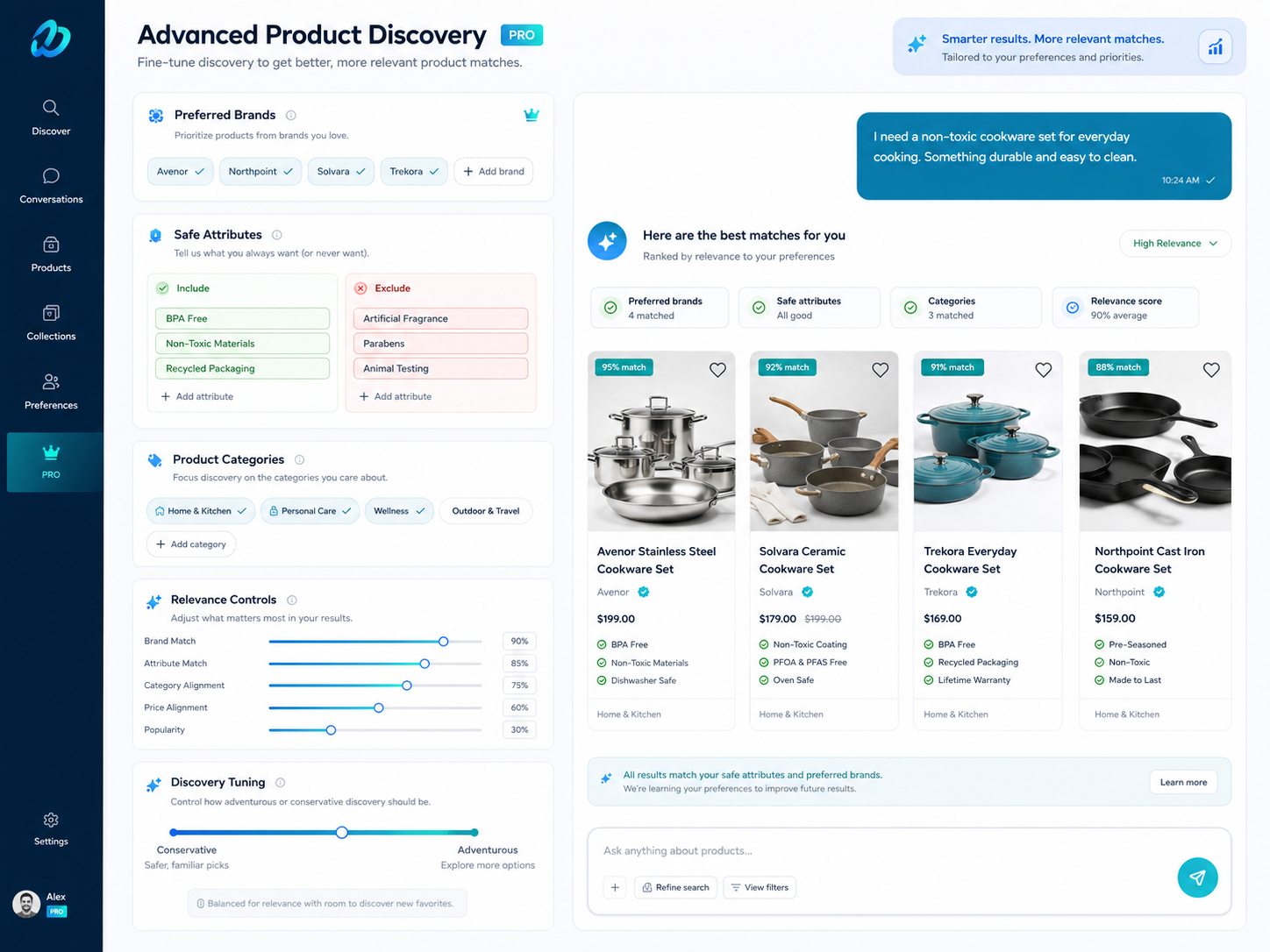
Product Discovery lets merchants tune how AI-assisted product search behaves: Product Search Priority boosting, Product Exclusions, safe catalog alternatives, and discovery controls that keep recommendations grounded in public catalog data.
What are AI Search Keywords?
AI Search Keywords are merchant-entered product hints for customer phrases, synonyms, and support language. They improve matching without changing public product titles, SEO copy, tags, or storefront text.
Does Knowledge Builder train an AI model?
No. Knowledge Builder creates approved Knowledge Text from selected public pages, posts, products, FAQ snippets, and policy content. It provides character budget/count, preview, copy, and export tools; it does not train an AI model.
Does Advanced Tracking include live carrier API tracking?
No. Advanced Tracking supports customer-safe custom tracking output through the verified order-status path when a store-specific safe integration is configured. It does not include live carrier API timelines, delivery prediction, carrier dashboards, or arrival forecasts.
Does Product Search expose exact stock counts?
No. Product Search and Product Availability return customer-safe availability signals, not exact stock quantity, supplier data, cost, margin, private products, or private product metadata.
Does it work with OpenAPI-compatible tools besides Tawk.to?
Yes. WebExpertDev AI Customer Support Assistant is OpenAPI-compatible by design. Tawk.to AI Assist is the primary setup path, but other compatible assistants can use the same OpenAPI schema and REST endpoints if they support OpenAPI tool calling, HTTPS requests, and bearer-token authentication.
- Schema/OpenAPI URL:
https://yourstore.com/wp-json/wc-ai-support/v1/openapi.json
- Compact Schema/OpenAPI URL:
https://yourstore.com/wp-json/wc-ai-support/v1/openapi.json?compact=1
- API Base URL:
https://yourstore.com/wp-json/wc-ai-support/v1
- Authorization header:
Authorization: Bearer YOUR_API_TOKEN
Use the full schema for initial setup. Use compact schema only when the platform has schema-size or import limits. Replace yourstore.com with the live WooCommerce domain. Local development URLs are only for local testing and normally cannot be reached by external AI platforms. Compatibility is platform-specific, so test before customer use.
How is licensing, billing, and downloads handled?
Freemius provides the customer account portal for billing, subscription management, and purchase account access. License recovery is used for Pro download or license recovery. Do not share license keys, payment data, or private account details in public support messages.
What happens if my Pro license expires?
Free remains usable without Pro. Pro commercial access, account management, and download recovery should be reviewed through the Freemius customer account and license recovery paths.
Do I need Web Expert Dev services to use Pro?
No. Pro is a plugin product, and paid implementation services are optional. Services can help teams map catalog/search behavior, support policies, Knowledge Builder content, tracking setup, assistant instructions, and launch testing.
Where can I review the terms?
Review the Freemius EULA, refund policy summary, and subscription policy summary before purchase.
Are lifetime licenses planned?
No lifetime licenses are planned. The public model is annual pricing, with monthly references shown only as secondary comparison points.